Start Feeling Better Now:
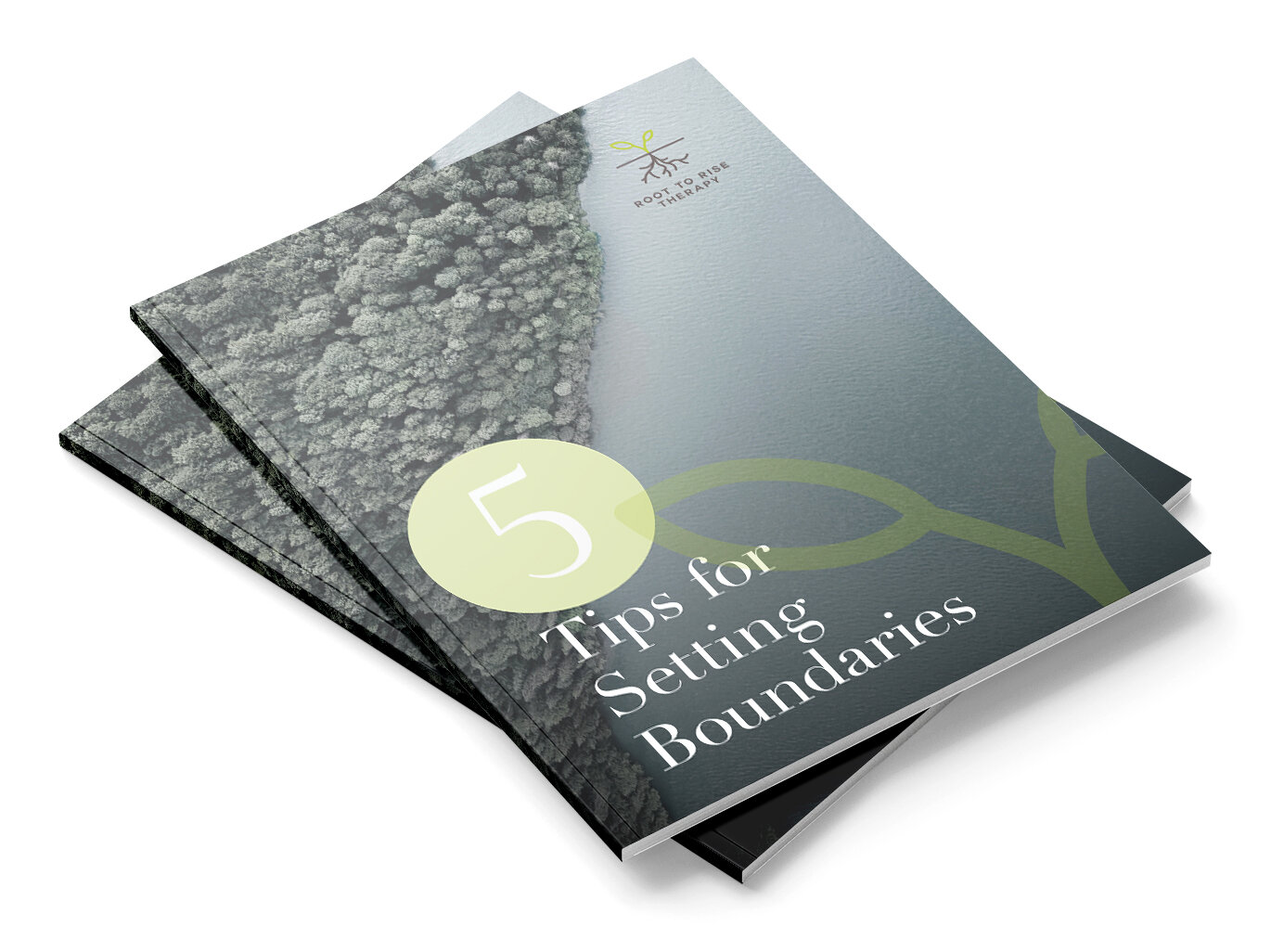
Get our 5 Tips for Setting Boundaries to create healthier and more satisfying relationships today.
A free gift from the founder of Root to Rise Therapy, Becky White MFT
Learning how to set boundaries is one of the greatest acts of self-care and can result in increased self-worth, confidence, and improved relationships with yourself and others. Sign up for our free download and you will also receive our newsletter.
Newest Blog Posts:

Your nervous system is constantly scanning your environment for cues of safety or danger. Most of the time, this happens automatically or outside of your awareness.

Every couple has logistics to manage, and healthy relationships do require collaboration. But what often gets missed is that problem-solving only works well when both partners feel emotionally safe enough to actually stay engaged in the conversation.

Oftentimes, people believe that memories are stored in the brain exactly the way in which they happened - waiting to be unpacked. But the reality is, our brain reconstructs memories, which allows these experiences to change over time.

One of the most common things I come across with couples when working through an argument is their dissatisfaction with not seeing “eye to eye”. And I get it, it would be SO much easier if we could solve our relationship problems by looking through the same lens or flat-out agreeing on everything. But the truth is, we don’t. And guess what? That’s ok!

Sometimes it’s difficult to know if therapy is the right choice for you at the stage of your life that you’re in. So, how do we make that decision?

Most people who overthink aren’t doing it because they enjoy worrying. They’re doing it because some part of them believes that if they think hard enough, long enough, or carefully enough, they can prevent pain, rejection, disappointment, or uncertainty.

The longer we go avoiding the obligation, the stronger the pressure becomes. The stronger the pressure, the further away we get from wanting to work on or accomplish the “should”. And in the space between “should” and “done”, anxiety covertly burrows under, expands, and fills the gap like a thick, nasty stink-bomb.

When you've spent years appearing self-sufficient, people often assume you don't need much support. You become the person everyone leans on while quietly wishing someone would ask how you're doing.