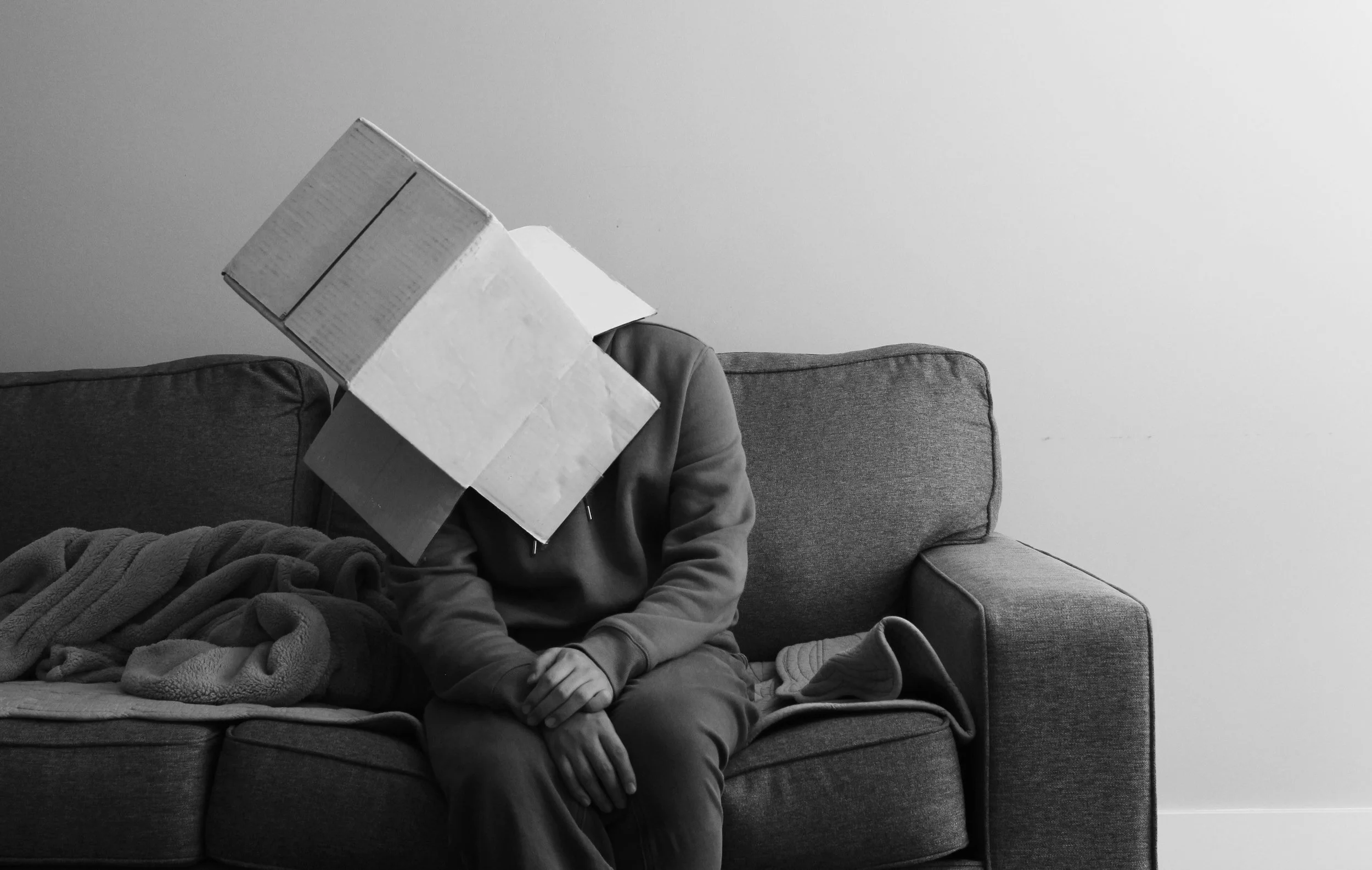
In my recent sessions, clients have been telling me that they are constantly playing catch-up, falling behind, or feeling like they are failing. When I ask them to explore what makes them feel this way, I’m usually met with statements such as, “Well, my coworker Sasha can complete five tasks in the time it takes me to complete one. I feel like I should be doing more.” Ah ha! There it is–we live in a society where we are constantly being compared to others, so it’s no wonder we find ourselves doing the same thing internally.
Holiday Stress
My professor made a poignant remark during the days leading up to the fall and winter holidays that had the entire class laughing at the accuracy and relatability of the observation. He shared that the holidays are a humbling time for personal growth because you can think you have worked through and resolved most of your triggers in therapy until that first fall holiday family get-together.
Seasonal Affective Disorder
Living in Los Angeles, even with its desirable year-round weather, presents mood challenges as the seasons turn.I know fall has arrived and we are heading towards winter when there is a subtle yet palpable shift in the weather: the sun begins to set earlier; a cold, crisp quality permeates the air; I start reaching for the jackets that have been at the back of my closet; I am exponentially more drawn to turning on my furnace instead of the AC unit as each day passes. I also experience an indistinct shift in my moods as the days get shorter and the nights grow longer.
Ego vs. Intuition
When it comes to taking steps on your life path, you often hear people urging you to “follow your gut.” But what exactly does that mean? And if you aren’t following our gut, what are you following?
You have two choices: to primarily listen to either your ego or your intuitive inner voice. So how do you differentiate between the two? How do you know if you are “trusting your gut” or following an ego-driven desire?
Nervous System Regulation Tips
Here are 5 quick and easy tools to calm the sympathetic nervous system and activate the parasympathetic nervous system when feeling dysregulated.
Am I Too Much?
I have heard people speak before about this concept of believing that they are ‘too much’ when it comes to relationships. This belief can keep people self-rejecting, negatively spiraling, and making rules like "I should keep who I am all to myself and shut down because I am too much." It is a distancing fear-based act that signals sympathetic flight mode, which puts the nervous system in a place of stress where the hypothalamus that regulates mood, sleep, hunger, and thirst in the brain activates the adrenal glands which releases about 30 stress hormones. As a result, the body slows digestion, increases heart rate, shortens breath, and constricts muscles. These beliefs, rules, emotional, and physical responses can lead to a perpetual pattern of isolating and closing off from relationships.
Foreboding Joy
If I asked you to name a vulnerable emotion, joy doesn’t present as the obvious answer. Instead, we tend to think about shame, loneliness, anger, anxiety, and other more traditionally “negative” emotions. So how is joy potentially the most vulnerable emotion we experience? Brene Brown answers this question in her research about foreboding joy, which she defines as: “the experience of joy immediately followed by worry or dread.”
So many of us have experienced this confusing phenomenon of mixed emotions without an understanding as to what or why this is happening internally. The feeling is so widespread that many idioms have attempted to illustrate this particular experience: have you ever thought, “This is too good to be true” or experienced the feeling of “waiting for the other shoe to drop?” I know I have experienced this long before I had a name for it. I remember one particular instance where I was looking over at my partner with love and awe, only to have the feeling transform into fears about the end of the relationship and how devastated I would feel. I also remember the intense negative self-judgment I experienced, becoming frustrated that I couldn’t enjoy a good thing and had to ruin it with these intrusive thoughts. Learning about foreboding joy has been illuminating and validating when thinking back on these memories.
I hear this same self-talk in therapy sessions every day. I have clients who describe not wanting to get too excited about a new relationship, not wanting to settle into a sense of calm at a new job, and generally not wanting to let their guard down in case the positive experience doesn’t last. So, why do we do this? Why does dread often follow joy?
Rest is Productive
As I type out these words, I find myself feeling overwhelmingly tired and in need of rest (in part due to the record-breaking heat wave taking over Los Angeles)… and so, I find it fitting to write about my experience. In this oppressive heat, I feel an all-encompassing sense of fatigue, trouble concentrating, eyelids drooping, and muscles feeling immensely heavy as I melt into the couch. Do these sensations sound familiar? As humans, we all need rest. That much is clear. So why do so many of us have such a hard time allowing ourselves to stop, slow down, and rest?
Over the years I’ve heard, and likely uttered, phrases such as, “I don’t have time to rest,” “I have too many things to do,” “I have no reason to feel tired,” “I don’t want to be lazy,” “I feel guilty when I rest,” and so on.
The way our capitalistic society requires us to operate is ultimately not sustainable. We are not computers… and even our computers need time to recharge! —and, to add to this metaphor, even a fully charged computer will begin to overheat and freeze up if it’s running too many applications at once!
Let’s start by reframing rest as productive—and move forward from there.
I'm FINE
It’s 7 PM on a Tuesday and your partner asks, “How are you? How was your day?” You stop to consider how to answer the question. You do a quick scan of your body and try to remember the day. Your neck is hurting from sitting at the computer, thoughts swirling in your head about that salty interaction you and your partner had that morning that went unaddressed, you just got a panicked text from your mother who needs you to call her immediately, you are annoyed with yourself for eating the peanut m & m’s when you said you wouldn’t, and to boot, you were up half the night stressing about a work project, so you were completely exhausted the entire day.
So, when your partner asks “How are you?” all you are able to muster up is the answer “I’m fine. It was fine.”
I’ve heard a few acronyms to describe the word FINE. F=Fucked Up, I= Insecure, N=Neurotic, and E=Emotional.
I also heard that FINE stands for Feelings Inside Not Expressed- a slightly more compassionate description. In my example above, from the neck pain to the disappointment in myself for eating the M & Ms, to the salty interaction from the morning, there were many feelings happening that were not being said.